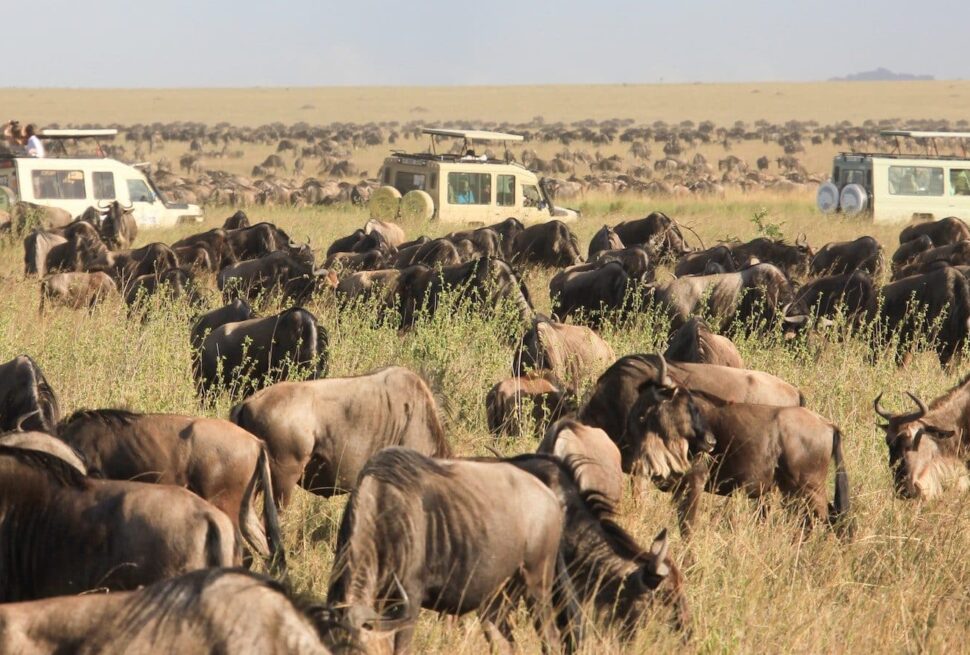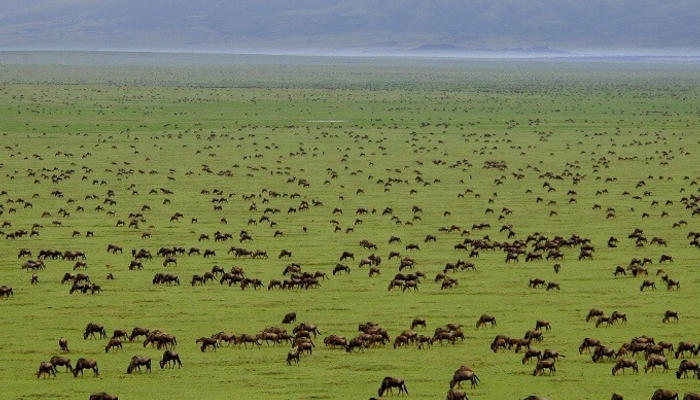
The Serengeti is a year-round safari destination, but the best time to visit depends on what you want to see. From the Great Migration to predator action, each season offers something unique.
1. June to October – The Great Migration (Dry Season)
- Wildebeest & zebra cross the Grumeti & Mara rivers.
- Peak wildlife viewing with high chances of predator action.
- Best time for first-time visitors.
- Downsides: Higher prices & larger crowds.
2. January to March – Calving Season
- Southern Serengeti (Ndutu) sees over 500,000 wildebeest calves born.
- Incredible predator action (lions, cheetahs, hyenas).
- Lush landscapes and excellent photography conditions.
- Great for families and wildlife enthusiasts.
3. April to May – Green Season (Low Season)
- Fewer tourists and discounted safari rates.
- Beautiful green landscapes.
- Some lodges close due to heavy rains, but wildlife is still plentiful.
4. November to December – Short Rains Season
- Wildebeest herds return to southern Serengeti.
- Dramatic skies and fewer crowds.
- Good balance between cost and experience.
5. Month-by-Month Highlights
- Jan–Feb: Calving season, predators hunting.
- Mar–May: Lush green season, affordable safaris.
- Jun–Jul: River crossings begin.
- Aug–Sep: Mara River crossings peak.
- Oct–Nov: Herds move south again.
- Dec: Herds reach southern Serengeti.
Conclusion
There is no single “best” time to visit Serengeti for an African Safari—it depends on whether you want to see the Great Migration, predator action, or avoid crowds. For most travelers, June–October is perfect for first safaris, while January–March is ideal for those seeking dramatic wildlife encounters.