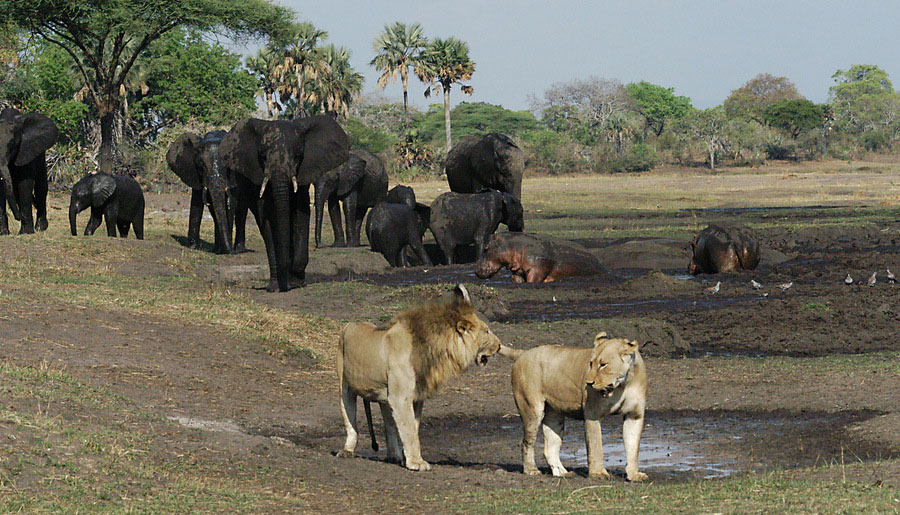
One of Tanzania’s Most Remote Parks
Katavi receives far fewer visitors than northern parks—perfect if you want privacy, silence, and raw nature.
- ✓Minimal crowds and vehicle congestion
- ✓Authentic wilderness atmosphere
- ✓Excellent for photographers
A true off-the-grid safari: big herds, hippo pools, predators, and minimal crowds—written by a local Tanzania safari operator.
Katavi National Park is one of Tanzania’s most remote and least-visited parks—ideal for travelers who want a raw, wilderness safari. In the dry season, wildlife concentrates around rivers and remaining waterholes, creating dramatic scenes of hippos, crocodiles, buffalo, elephants, and predators.
A fast overview to help you plan—best season, wildlife highlights, how to get there, and what to expect in a remote park.
Katavi is for travelers who want a real wilderness experience—fewer vehicles, untamed scenery, and powerful dry-season wildlife around shrinking water sources.
Katavi receives far fewer visitors than northern parks—perfect if you want privacy, silence, and raw nature.
From June to October, animals cluster near rivers and remaining pools—often producing intense wildlife scenes.
Katavi pairs well with chimp trekking in Mahale or Gombe—ideal for adventurous, multi-experience travelers.
Katavi is best for: experienced safari lovers, photographers, and travelers who value privacy. If you want a classic first-time safari with many lodge options, start with the Northern Circuit.
Katavi’s habitats include floodplains, rivers, woodlands, and seasonal wetlands. In the dry season, wildlife concentrates near water, making sightings highly efficient and often dramatic.
Katavi is known for large buffalo herds, elephants, hippos, crocodiles, and predators such as lions and hyenas. Sightings are strongest in the dry season when animals gather at remaining water.
Katavi is most rewarding in the dry season when wildlife concentrates around water. The green season can be beautiful, but access and wildlife distribution are more variable.
| Season | Months | What to expect | Safari quality |
|---|---|---|---|
| Dry season | Jun – Oct | Best wildlife concentration; clear visibility; peak wilderness experience | Excellent |
| Shoulder months | Nov – Dec | Transition season; fewer visitors; conditions vary by rainfall | Very good |
| Green season | Jan – Mar | Greener landscapes; birdlife; wildlife more spread out | Good value |
| Long rains | Apr – May | Heavier rains possible; logistics can be harder; best for flexible travelers | Seasonal |
Katavi is a classic game-drive destination—focused, wild, and remote. Most itineraries prioritize extended game drives and flexible timing to follow predators and water-dependent wildlife.
Early starts often deliver the best predator activity and cooler temperatures for wildlife viewing.
Ideal for covering more ground and spending time at rivers and hippo pools where action can build over hours.
Katavi’s low vehicle density is excellent for uninterrupted sightings and clean compositions.
How to plan Katavi: prioritize 3–5 nights, fly-in routing, and a private guide/vehicle for maximum flexibility.
Katavi safaris are typically fly-in due to distance, and are best as private, tailor-made trips. Below are popular formats you can use as a starting point.
Best for travelers who want a true wilderness safari in limited time, with efficient logistics.
Recommended length for deeper exploration and higher chances of extended predator behavior.
A signature western itinerary combining big-game wilderness with chimp trekking on Lake Tanganyika.
Featured trip: Start with a safari template below—or request a tailor-made Katavi itinerary based on your dates and budget.
A practical safari starting from Dar es Salaam—ideal if you want a straightforward, guided safari plan.
Build a private Katavi itinerary with flights, camps, and the best dry-season wildlife zones for your dates.
Combine Katavi’s wilderness with chimp trekking on Lake Tanganyika—best for adventurous travelers.
Katavi is remote. Most travelers choose a fly-in safari to maximize time in the park. Road access is possible but long, and best for extended western circuit itineraries.
Possible for travelers with ample time who want a true expedition-style trip across western Tanzania.
The most efficient way to reach Katavi—ideal for 3–7 day safaris and western circuit combos.
Katavi has limited accommodation compared to northern parks—another reason it stays wild and uncrowded. Options typically focus on high-quality camps and an expedition feel.
Best for adventurous travelers who want a close-to-nature experience and strong value.
A balanced option: comfortable tents, strong guiding, and good proximity to wildlife areas.
For travelers who want maximum comfort in a remote setting—limited inventory, best booked early.
Planning tip: in Katavi, accommodation availability is limited, so aligning camps with your travel dates is often the first step—then we finalize flights and the safari plan.
Katavi is one of Tanzania’s most remote parks, so the total safari price is driven mainly by logistics (flights) and limited camp inventory—not just the park entry fee. Use the daily ranges below to set a realistic budget before requesting a custom quote.
| Safari style (Katavi) | Average daily budget | What this usually covers |
|---|---|---|
| Entry-level / camping (limited) | From ~$360–$650 / person / day | Basic camping-style routing (often longer transfer days), shared costs, park activities. Some advertised Katavi tours start from about $1,450 for 4 days (≈$360/day) depending on route and inclusions. |
| Mid-range fly-in safari | ~$700–$1,100 / person / day | Comfortable tented camp, guiding, meals, game drives, and typical safari service. Note: some camp rates alone can be around $585 per person, before adding flights and full safari logistics. |
| Luxury fly-in safari | ~$1,200–$2,000+ / person / day | Premium camps, stronger locations/service, high-demand dates, and fully guided private safari operations. Best fit for travelers prioritizing exclusivity and maximum time in the park. |
| Domestic flights (key cost driver) | Add flights (varies by route) | Katavi is typically accessed by light aircraft. Flight routing and seat availability can shift the total cost significantly, especially for shorter trips (2–3 nights). |
Notes: Daily budgets vary by season, camp availability, flight routing, and whether your safari is private or shared. Park fees exist, but they are typically not the main driver of the final Katavi total.
Quick answers to common Katavi planning questions—best time, how many days, fly-in logistics, and what to expect.
Free Custom Planning
Tell us your dates, number of travelers, and comfort level—and we’ll design a personalised Katavi safari with the best routing (fly-in or long-route), camps, and wildlife focus for your trip.
Choose how you’d like to start planning:
Want more planning details? Start with our main guide: Tanzania Safari.