Tanzania Safari Specialists • Local Owned • Tripadvisor Reviews
Marangu Route

Kilimanjaro Climbing – Marangu Route 6 Days

The 6-Day Marangu Route Kilimanjaro climb is one of the most established routes to the summit of Mount Kilimanjaro. Often called the “Coca-Cola Route,” Marangu is the only Kilimanjaro route where climbers sleep in mountain huts rather than tents.

This itinerary gives you five nights on the mountain and includes an additional acclimatization day compared with shorter Marangu programs. The gradual ascent from Marangu Gate through Mandara Hut, Horombo Hut and Kibo Hut provides time to adjust to increasing altitude before the summit attempt.

The final climb begins around midnight from Kibo Hut, taking you through the steep upper slopes toward Gilman's Point and onward along the crater rim to Uhuru Peak, the highest point in Africa at 5,895 metres.

After reaching the summit, you descend to Horombo Hut for a final night on Kilimanjaro before continuing down to Marangu Gate.

kilimanjaro marangu route 6 days
Duration6 Days
Distance72 km / 45 miles
DifficultyModerate
Highest Point5,895 m / 19,341 ft
AccommodationMountain Hut
THE ROUTE

About the Marangu Route

The Marangu Route approaches Kilimanjaro from the southeastern side of the mountain. The trail passes through several distinct ecological zones, beginning in the cultivated foothills and rainforest before entering the moorland and alpine desert zones.

Unlike the Machame and Lemosho routes, Marangu uses permanent mountain huts. Mandara and Horombo huts provide dormitory-style accommodation, while Kibo Hut is the final sleeping point before the summit attempt.

The 6-day version is designed to provide a more gradual progression than the shortest Marangu itineraries. The extra time around Horombo helps climbers adapt to altitude before moving toward Kibo and the summit.

DAY BY DAY

6-Day Kilimanjaro Itinerary

1

Marangu Gate to Mandara Hut

Route: Marangu Gate → Mandara HutElevation: 1,860 m → 2,720 mDistance: Approximately 8 kmHiking time: 4–5 hoursStay: Mandara HutMeals: Lunch and dinner

After breakfast, your guide will transfer you from your hotel to Marangu Gate, where registration and park formalities are completed. The trek begins through the lush lower slopes of Mount Kilimanjaro. The trail initially passes through cultivated farmland before entering the dense montane rainforest. You may encounter birds and small forest animals along the way, while the vegetation gradually changes as you gain altitude. After several hours of walking, you arrive at Mandara Hut, located in the rainforest zone. Your guide will organize your accommodation and meals while you have time to rest and explore the nearby area. For climbers who still have energy, a short walk toward Maundi Crater may be possible depending on weather and timing. From the viewpoint, there can be impressive views toward northern Tanzania and Kenya. Overnight: Mandara Hut.
2

Mandara Hut to Horombo Hut

Route: Mandara Hut → Horombo HutElevation: 2,720 m → 3,720 mDistance: Approximately 12 kmHiking time: 6–8 hoursStay: Horombo HutMeals: Breakfast, lunch and dinner

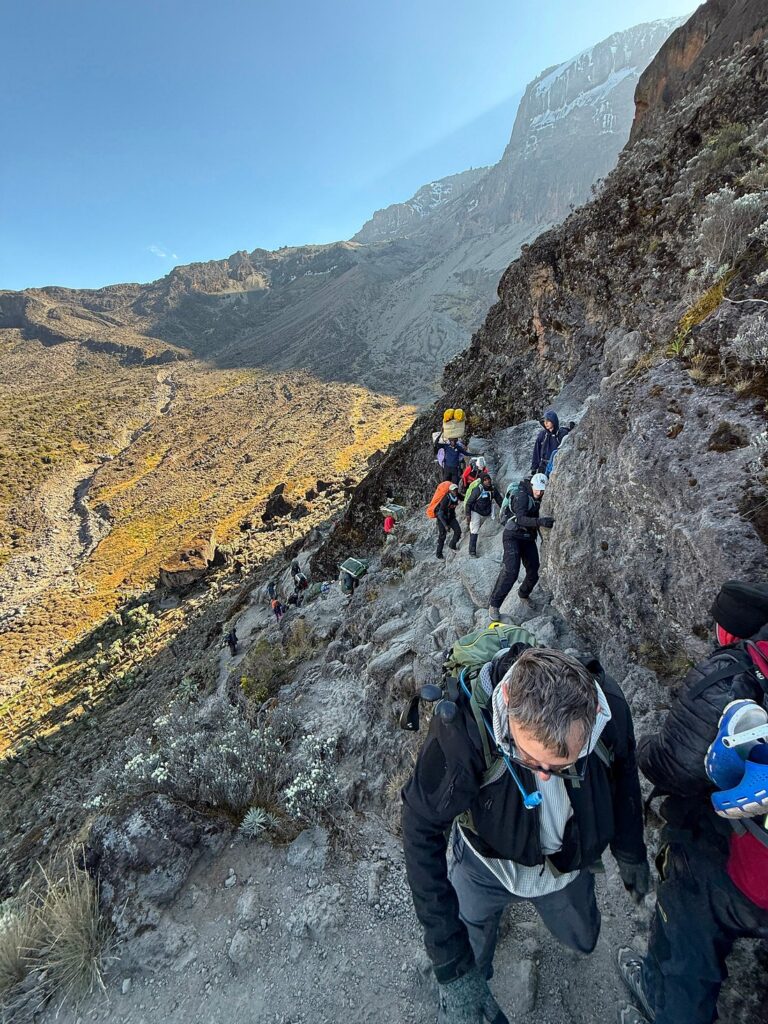
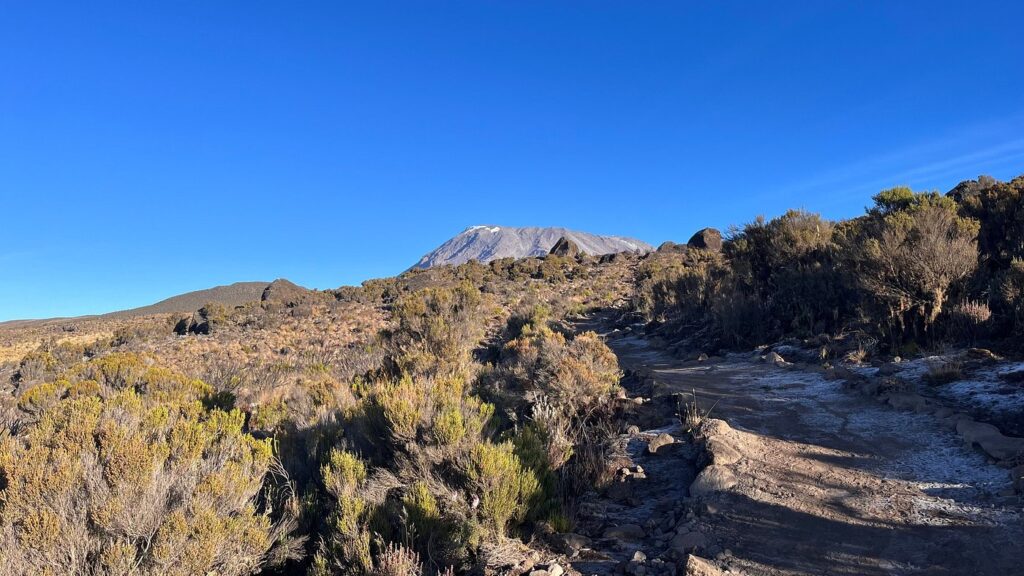
After breakfast, leave the rainforest behind as the landscape changes into open moorland and heath vegetation. The trail gradually climbs toward Horombo Hut. Along the way you can see giant lobelias, senecios and other high-altitude vegetation characteristic of Kilimanjaro. As you climb higher, views of Mawenzi Peak and the upper slopes of Kibo become increasingly visible when weather conditions are clear. The walk is steady rather than technically difficult, but the increasing altitude means you should maintain a comfortable pace and drink plenty of water. Arrive at Horombo Hut, where you will spend the night. Overnight: Horombo Hut.

3

Horombo Hut Acclimatization Day

Route: Horombo Hut → Mawenzi Ridge / Zebra Rocks → Horombo HutElevation: 3,720 m → approximately 4,300 m → 3,720 mDistance: Approximately 5–8 kmHiking time: 4–5 hoursStay: Horombo HutMeals: Breakfast, lunch and dinner

Today is dedicated to acclimatization. After breakfast, you make a gradual ascent toward the Mawenzi side of the mountain. Depending on weather and the group's condition, your guide may take you toward Zebra Rocks or a suitable viewpoint on the Mawenzi trail. The purpose is to spend time at a higher elevation before returning to sleep at Horombo Hut. This follows the important acclimatization principle of “climb high, sleep low.” The walk also provides excellent views of Mawenzi Peak, Kibo and the surrounding Kilimanjaro landscape. Return to Horombo Hut in the afternoon for lunch, rest and preparation for the next stage. Overnight: Horombo Hut.

4

Horombo Hut to Kibo Hut

Route: Horombo Hut → Kibo HutElevation: 3,720 m → 4,703 mDistance: Approximately 10 kmHiking time: 6–8 hoursStay: Kibo HutMeals: Breakfast, lunch and dinner

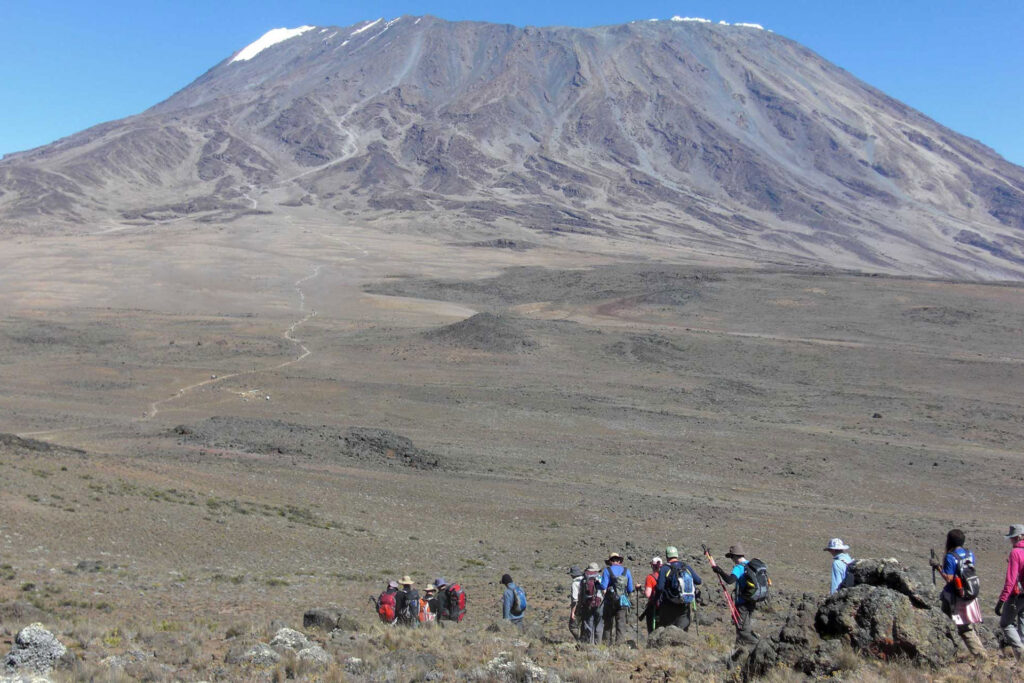
After breakfast, begin the trek toward Kibo Hut, the final camp before the summit. The vegetation becomes increasingly sparse as you enter the alpine desert zone. The trail crosses the broad Saddle, the high-altitude area separating Kibo and Mawenzi. This section is relatively gradual but becomes physically demanding because of the altitude. There is little natural shelter and vegetation becomes almost absent. The massive summit cone of Kibo dominates the landscape ahead. Upon reaching Kibo Hut, you will have an early dinner and receive a briefing from your guide about the summit attempt. You should prepare your summit clothing, headlamp, water and daypack before going to sleep early. Overnight: Kibo Hut.

5

Kibo Hut to Uhuru Peak, then Horombo Hut

Route: Kibo Hut → Gilman's Point → Uhuru Peak → Kibo Hut → Horombo HutElevation: 4,703 m → 5,685 m → 5,895 m → 3,720 mDistance: Approximately 22 kmHiking time: 12–15 hoursStay: Horombo HutMeals: Breakfast, lunch and dinner

This is the summit day and the most demanding section of the climb. You will normally wake around midnight and begin climbing in darkness. Your guide will set a slow, steady pace because the combination of steep terrain, cold temperatures and high altitude makes the ascent challenging. The trail climbs through loose volcanic scree toward Gilman's Point at 5,685 m on the crater rim. After reaching Gilman's Point, continue around the crater rim toward Stella Point and then along the upper crater rim toward Uhuru Peak. At 5,895 metres, Uhuru Peak is the highest point on Mount Kilimanjaro and the highest elevation in Africa. Spend a short time at the summit for photographs and to appreciate the views, depending on weather and your physical condition. You then begin the descent toward Kibo Hut, where you will take a short rest and have refreshments before continuing down toward Horombo Hut. The descent to Horombo provides a major change in scenery as you move back through the alpine desert and moorland zones.

6

Horombo Hut to Marangu Gate

Route: Horombo Hut → Marangu GateElevation: 3,720 m → 1,860 mDistance: Approximately 20 kmHiking time: 5–7 hoursStay: Hotel / onward travelMeals: Breakfast and lunch

After breakfast, begin the final descent toward Marangu Gate. The trail takes you back through the moorland and into the lush rainforest. After several days at high altitude, the return to lower elevation is usually a welcome change. At Marangu Gate, complete the park exit procedures and collect your Kilimanjaro summit certificate if you successfully reached the required summit point. Your vehicle will meet you at the gate for transfer back to your hotel in Moshi or onward to your next destination. End of the Kilimanjaro climb.

WHY THIS CLIMB

Why Choose This Kilimanjaro Tour?

The 6-Day Marangu Route is suitable for climbers who prefer hut accommodation and a clearly established trail. It avoids camping and follows the same route for both ascent and descent, making the logistics relatively straightforward.

The itinerary also provides more time for acclimatization than shorter Marangu climbs. However, altitude remains the main challenge, and reaching Uhuru Peak depends on individual acclimatization, weather and mountain conditions.

BOOKING DETAILS

What's Included

Included

  • Private Kilimanjaro mountain guide
  • Professional mountain crew
  • Park entrance fees
  • Kilimanjaro National Park conservation fees
  • Camping/hut fees
  • Rescue fees
  • All mountain meals
  • Drinking water while trekking
  • Mountain hut accommodation
  • Government taxes and park levies
  • Airport/Moshi transfers where included in your booking
  • Summit certificate after successful summit attempt
  • Emergency first-aid equipment
  • Pre-climb briefing
  • Professional trekking support

Not Included

  • International flights
  • Tanzania visa
  • Travel insurance
  • Personal trekking equipment
  • Tips for mountain crew
  • Alcohol and personal beverages
  • Laundry
  • Personal expenses
  • Hotel accommodation before or after the climb unless specified
  • Extra transfers not included in the itinerary
  • Personal porter beyond the standard crew arrangement
  • Medical or evacuation expenses not covered by your insurance
TOUR FAQ

Frequently Asked Questions About This Climb

How difficult is the 6-day Marangu Route?

The 6-day Marangu Route is a challenging high-altitude trek to Uhuru Peak. Although the route has a well-established trail and hut accommodation, climbers still face significant elevation gain, cold conditions and a demanding summit day.

Where do I sleep during the 6-day Marangu Route climb?

The Marangu Route uses mountain hut accommodation rather than camping. Overnight stays are typically in huts at Mandara, Horombo and Kibo, depending on the itinerary.

Why choose the 6-day Marangu Route instead of the 5-day option?

The 6-day itinerary provides additional time on the mountain compared with the shorter itinerary. This allows a more gradual progression toward the summit and additional time for acclimatization before the final ascent.

What is the summit day like on the 6-day Marangu Route?

The summit attempt normally begins very early from the Kibo area. Climbers ascend toward Gilman's Point and continue toward Uhuru Peak before descending to the lower mountain. The summit section is usually the most demanding part of the climb because of the altitude, cold and long hiking hours.

Can I combine the 6-day Marangu climb with a Tanzania safari?

Yes. After completing the Kilimanjaro climb, you can extend your trip with a Northern Tanzania safari. Popular destinations include Serengeti, Ngorongoro and Tarangire, allowing you to combine mountain climbing with a classic Tanzania wildlife experience.